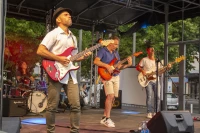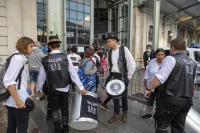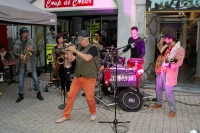
Depuis 39 ans la fête de la musique annonce le début de l'été avec un délicieux mélange de scènes organisées, de concerts impromptus au coin d'une rue ou de déambulation festives. Mais les règles sanitaires liées à la COVID-19 ne permettront pas à la Fête de la Musique 2021 de s'exprimer aussi pleinement. Le Ministère de la Culture vient de publier un protocole sanitaire qui prévient que la spontanéité et les contraintes sanitaires sont incompatibles. Un de ses principes fondateurs est la spontanéité, ce qui rend l’édition 2021 particulièrement complexe à organiser. Elle devra en effet être adaptée à la situation sanitaire actuelle, afin de préserver la sécurité de toutes et de tous, tout en s’inscrivant dans la démarche de reprise des activités culturelles
. La fête de la musique ne bénéficiera pas d'exception aux contraintes sanitaires de la phase qui a commencé le 9 juin. Revue de ce qui sera possible et de ce qui ne le sera pas.
Plus de couvre-feu
Dès dimanche 20 juin le couvre-feu sera supprimé. Plus de contrainte ce coté alors que le couvre-feu à 23 heures comme il était en vigueur depuis le 9 juin. La fête de la musique pourra donc durer aussi longtemps que les bars, restaurants et autres scène ou le public est assis seront ouvert. Ce n'est peut-etre pas jusqu'au bout de la nuit, mais la fête de la musique ne souffrira donc pas du couvre-feu.
Mais pas de public debout
Il faut oublier le public qui se promène et qui va de groupe en groupe, d’une proposition musicale à une autre. Même chose pour les déambulations festives comme les batucada qui parcourent les rues sui du public qui ondule au son des percussions. Seule les configurations assises seront autorisées, afin de faciliter la gestion de flux et éviter regroupements et attroupements qui seront encore, à cette époque, interdits
. Les regroupements sur la voie publique sont limités à 10 personnes. A cet égard, les concerts impromptus des musiciens, notamment amateurs sur la voie publique ne seront pas autorisés afin de ne pas créer de rassemblements
Les concerts sont peut-être possible dans les bars, mais ...
Les bars et restaurants devront respecter les conditions établies depuis le 9 juin sans aucun aménagement pour la fête de la musique. C'est à dire consommateurs assis par tablées de max 6 personnes avec jauge de 100 % de la capacité de la terrasse et de 50% en intérieur. et pas de consommation ni de service au bar. Le ministère de la Culture prévient les concerts dans les bars et restaurants ne seront pas autorisés dès lors qu’ils sont susceptibles d’engendrer des regroupements sur la voie publique et d’accroître les risques de contamination en intérieur (chant, instrument à vent, consommation en intérieur sans masque, risque de ne pas respecter les gestes barrières dans une ambiance
. Et d'ajouter que consigne sera passée aux préfets pour interdire par arrêté préfectoral l’organisation de concerts dans les bars et restaurants dans leur département ou dans certaines parties du département
.
De plus, Aucune dérogation ou tolérance n’est prévue le soir de la Fête de la musique
prévient le ministère de la culture. Avant de préciser que les forces de l’ordre, en étroite liaison avec les communes et les polices municipales, seront mobilisées afin de veiller au respect des règles ainsi établies
. Une fête de la musique pas comme les autres donc.
Des événements bien cadrés avec un public assis
Le ministère de la Culture recommande plutôt d'organiser des événements avec un public assis et dans le respect des protocoles en vigueur et en respectant les plafonds de jauge, la distanciation et l'aération prévue par le protocole en vigueur depuis le 9 juin. C'est à dire public assis, jauge limitée à 65 % de la capacité nominale, pass sanitaire au-delà de 1000 personnes et maximum de 5000 personnes. Une configuration qui se prête a quelques événement comme des concerts de musique classique ou de chanson, à des spectacle comme de la danse. Mais qui est clairement incompatible avec la diversité musicale qui fait l'identité de la Fête de la Musique. La encore, ce sera une fête de la musique pas comme les autres.
Des conditions sanitaires et un protocole qui nous amène donc bien loin de la culture spontanée de la Fête de la Musique.
 @bigorre_org