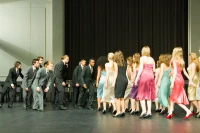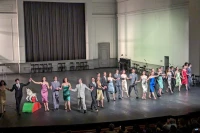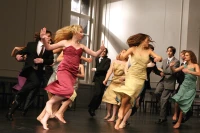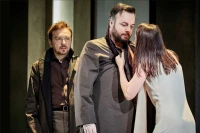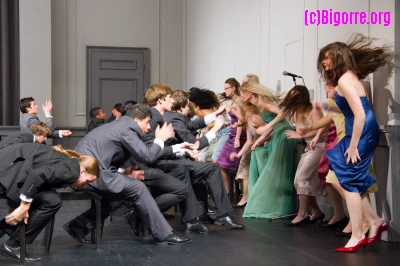
Une grande salle de bal aux murs blanc et treize hommes en costume sombre, autant de femmes en robes style retro. C’est une « salle de rencontre », le Kontakthof de Pina Bausch, une pièce écrite il y a plus de trente ans alors qu’elle venait de créer la Tanztheater Wuppertal. Une pièce qu’elle à reprise en 2000 avec des danseurs non professionnels de plus de 65 ans en expliquant qu’elle ne pouvait pas attendre que ses propres danseurs aient atteint la soixantaine. Une pièce qui a trouvé une ultime version à quelques mois de la disparition de la grande dame de Wuppertal avec des adolescents de quatorze ans sélectionnés dans les écoles locales
Au fil des ces trois versions, Kontakthof ne change pas dans sa forme. La même salle de bal aux murs blancs. La même musique qui évoque l’Allemagne des années 30. Les mêmes costumes, les mêmes gestes très simples, les mêmes mouvements tirés du quotidien. Près de trois heures ou le public regarde évoluer ces vingt-six danseurs enfermés dans leur sal de bal comme des rats en cage. Beaucoup de tendresse, de l’amour, du désir, de l’envie, de la vanité, une bonne dose d’humour, mais aussi de la jalousie, de la haine, de l’hystérie, et la plus extrême violence. C’est une véritable exploration sans concession des possibles de la nature humaine, avec toute sa beauté, sa complexité, sa perversité et sa cruauté. Des mouvements anodins répétés, des scènes tendres et brutales qui révèlent doucement leur subtilité et leur incroyable portée.
Avec cette ultime version, Pina Bausch semble apporter la clef de voute à une œuvre entamée en 1978. Ces adolescents qui jouent les adultes dans leurs costumes stricts sont sur le point de prendre le relais de leurs parents. Ils se retrouvent à leur tour dans cette salle pour un bal des débutants. Une nouvelle génération en construction, à la maîtrise pas encore complètement aboutie, et c’est encore et toujours la même histoire qui apparaît : cette fois encore, il suffira de quelques notes du « Oh, Fraulein Grete » de Juan Llossas pour que le chaos des relations humaines cède la place aux conventions d’une société souriante et ordonnée. Il suffira de baisser le son du tango pour que le martèlement des pas des danseurs sur le sol annonce déjà le bruit des bottes de cette jeunesse allemande. Un spectacle qui n’en fini pas de nous fasciner. Il ne reste plus qu’aller voir au cinéma du Parvis « Les rêves dansants », un documentaire qui témoigne de la gestation de ce Kontakthof, pour prolonger un peu le plaisir de cette soirée.
 @bigorre_org