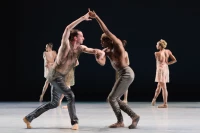
Thomas Ostermeier returns with The Seagull at the Parvis
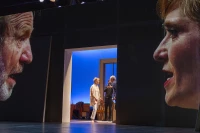
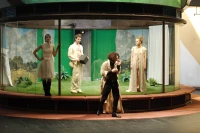
Theatre event of the season with Chekhov's The Seagull directed by Thomas Ostermeier which will be on the Parvis stage on Wednesday and Thursday.
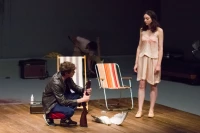
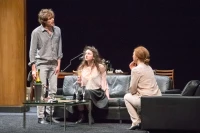
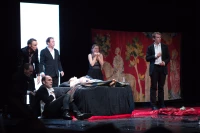
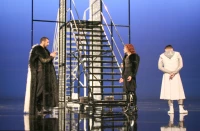
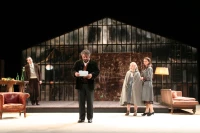
La mouette mise en scène de Thomas Ostermeier / photo Arno Declair
This is undoubtedly one of the highlights of the Parvis theater season. The latest production by the great German director Thomas Ostermeier, a true star of the European stage, repeatedly invited by the Avignon Festival and most recently receiving a standing ovation for his Richard III, will be presented at the Parvis on Wednesday and Thursday. After captivating Tarbes audiences two years ago with the tormented beauty of Ibsen's The Ghosts, he returns with The Seagull, another great play that he has just staged at the Théâtre de Vidy in Lausanne. A great name in contemporary directing and one of Chekhov's masterpieces, which we saw on the same stage in 2012 in a version directed by Arthur Nauzyciel. The encounter promises to be spectacular! The German director announces a radically updated reading based on a new French translation, a revisited perspective on the story of the young actress Nina, loved by a young author, Treplev, who has written her a play, to whom she prefers Trigorin, a renowned writer and lover of Treplev's mother. An impossible relationship full of disillusionment on the romantic, social, and artistic levels, as Chekhov knows how to capture. Thomas Ostermeier emphasizes the profound existential solitude of each of the characters in this tragic social comedy and its timeless nature by multiplying the echoes of our current world. A great moment of theater in perspective that theater lovers will not miss under any circumstances!
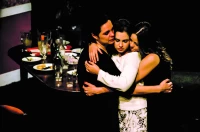
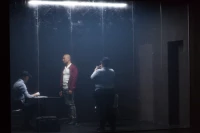
C’est dans une atmosphère qui ressemble à un conte noir que Pascal Kirsch a invité le public du Parvis mardi soir, à peine plus d'un an après sa création au Festival d'Avignon.
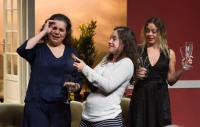
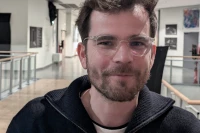
Guest artist for the season, Baptiste Amann was at Le Parvis this week for Lieux communs. He will return in March for the premiere of Sans suite [Un air de roman], which he wrote.
Common Places begins like a thriller, but as the show progresses, it reveals a luminous commentary on the complexity of the feelings that guide - or do not - individuals.
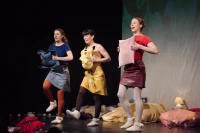
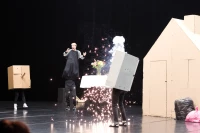
Miet Warlop's After all Springville is a funny, strange show. A baroque universe where images are like building blocks that allow the viewer to make sense of what they see. Or not.
 @bigorre_org / ©Bigorre.org / published on Thursday, November 3, 2016